Who_am_I
Hi, I'm Antonie
Robotic Engineer.
In the comic Donald Duck there is a character called Willie Wortel, a wild-haired inventor who builds crazy contraptions in his garage with his sidekick 'lampje'. As a child, when people asked me what I wanted to become when I grew up, the answer usually was Willie Wortel. Turns out that answer never really changed, and I'm proud to say I'm
I finished my MSc Robotics at the Univerity of Twente in 2026, specialising in Mechatronics & Physical AI and Algorithms & Social AI. My work sits at the intersection of mechanical design, embedded systems, and software — the space where things stop being simulations and start actually moving.
Besides my work, I tend to be building something. I have troubles sitting still. A great example is this website, a side project assembled on evenings and weekends, because apparently my idea of relaxing is writing CSS.
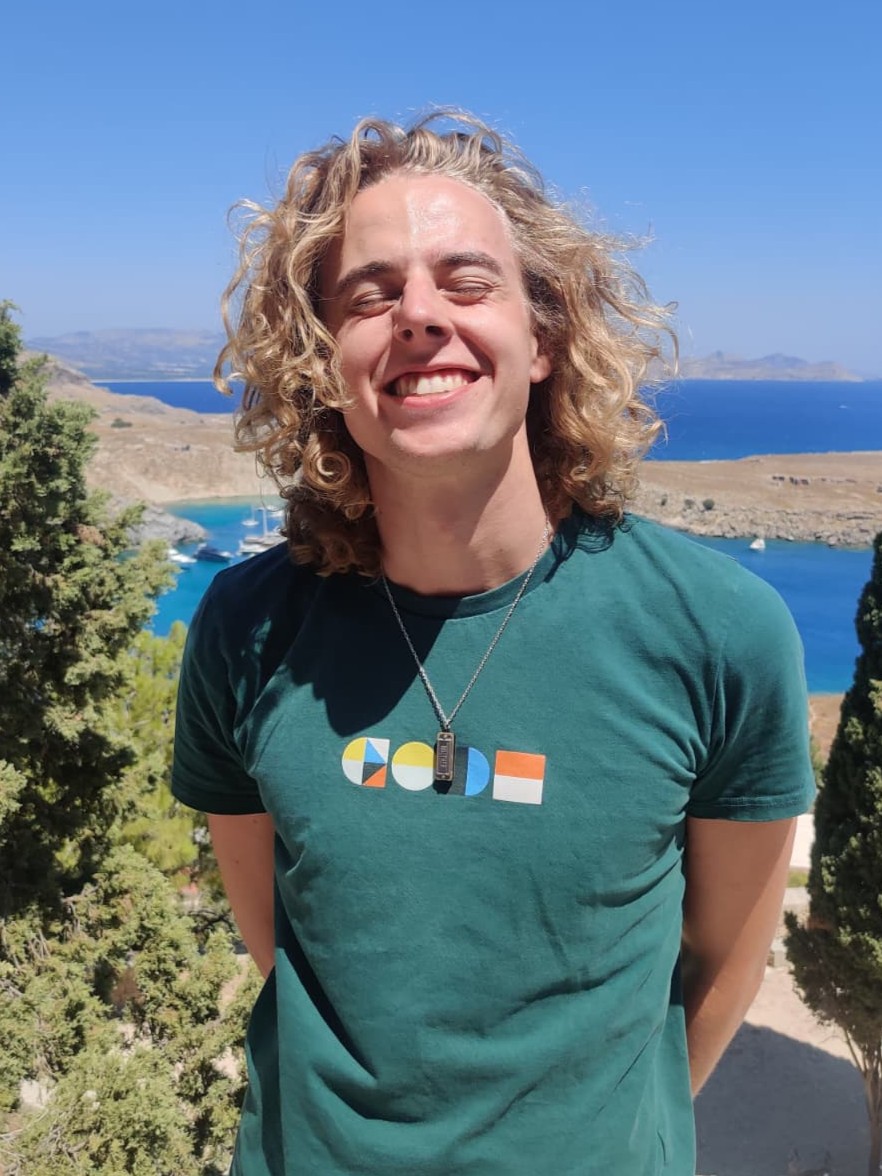
Figure 1 - Antonie Veldwachter
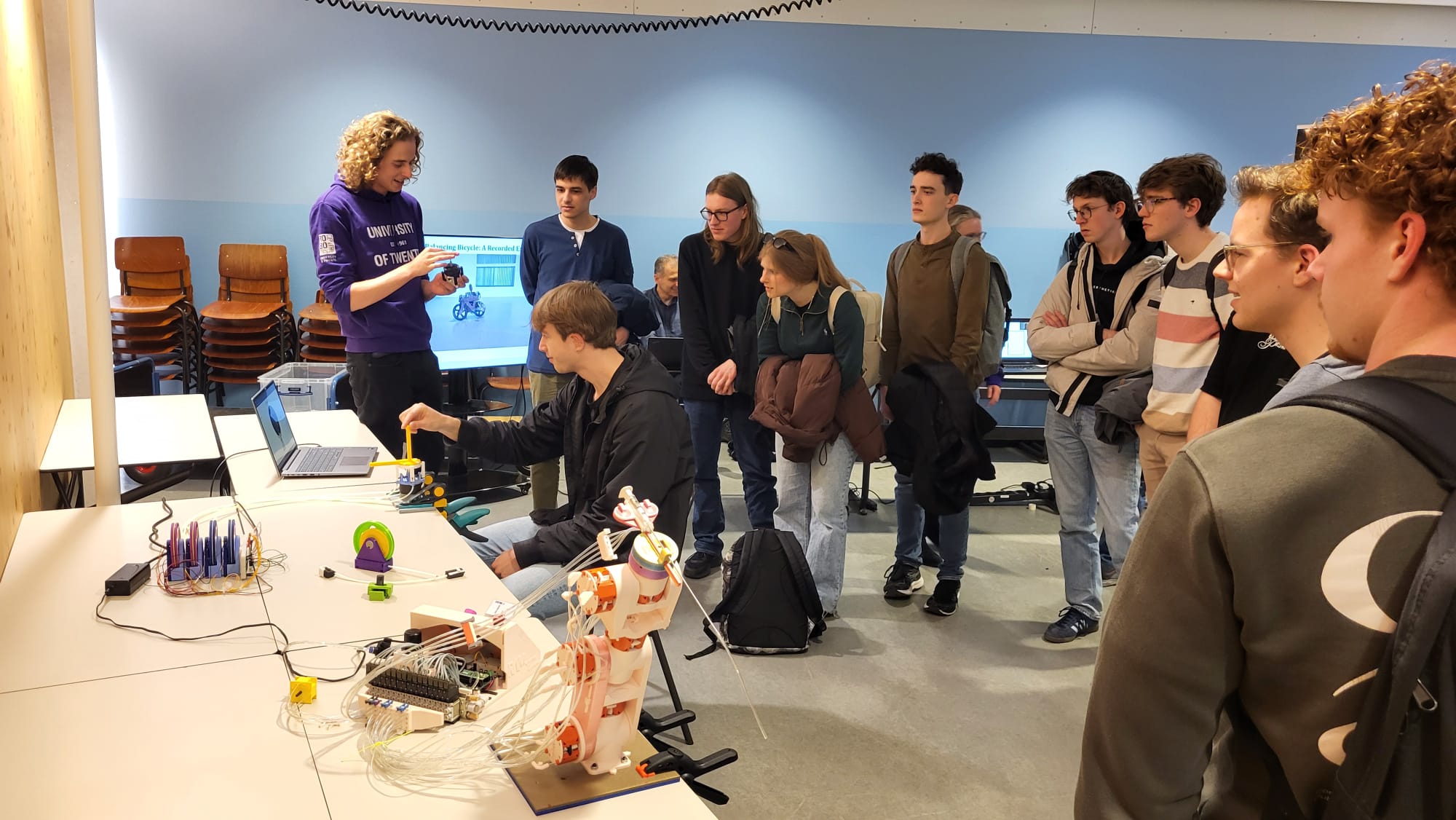
Figure 2 - MSc. Opendays Utwente
How I work
Curious first, systematic second
During my career I've encountered many different approaches and methods for a project, each claiming to be the one-size-fits-all solution. I also learned that all of these methods have their own flaws and challenges to overcome. So which path is best? I believe it's your own.
Mine starts with curiosity, find out why it is the way it is. That said, once I have the picture I try to be realistic and structured, and try to answer questions like: What does the project need most? And is it really necessary to do something about this? Structure to a project is important as it helps you see the big picture, which saves time backtracking problems later.
Creativity is the third ingredient. Constraints are not obstacles, they are the brief. Working within tight boundaries, whether MR-compatibility, weight limits, or a non-existing budget for a personal project, tends to produce more inventive results than an open canvas.

Figure 3 - Kitesurfing
Outside engineering
Anything with a board
There is a pattern to most of my hobbies: if it involves a board, I am probably interested. Kite surfing, snowboarding, chess (yes, a chessboard still counts). The common thread is that they all reward patience, reading the situation, and occasionally committing to a decision that might end badly.
Here is a list of my favorite hobbies:
Kite Surfing
Wind, water, and a healthy respect for physics.
Snowboarding
Controlled falling, but make it sport.
Chess
A board game. It counts.
Longboarding
Build my own electric longboard. Mostly reliable.
Wakeboarding
Experience with being a pendulum
Soldering
Circuitboards..? Maybe that is pushing it.

Figure 4 - Snowboarding
A few ideas I keep returning to
Things worth remembering
“Where blame goes, power follows.”
“Be curious, not judgemental.”
“Comparison is the thief of joy.”
Want the full picture?
Download my CV
Everything above in a more traditional format, for those who prefer their engineers on paper.